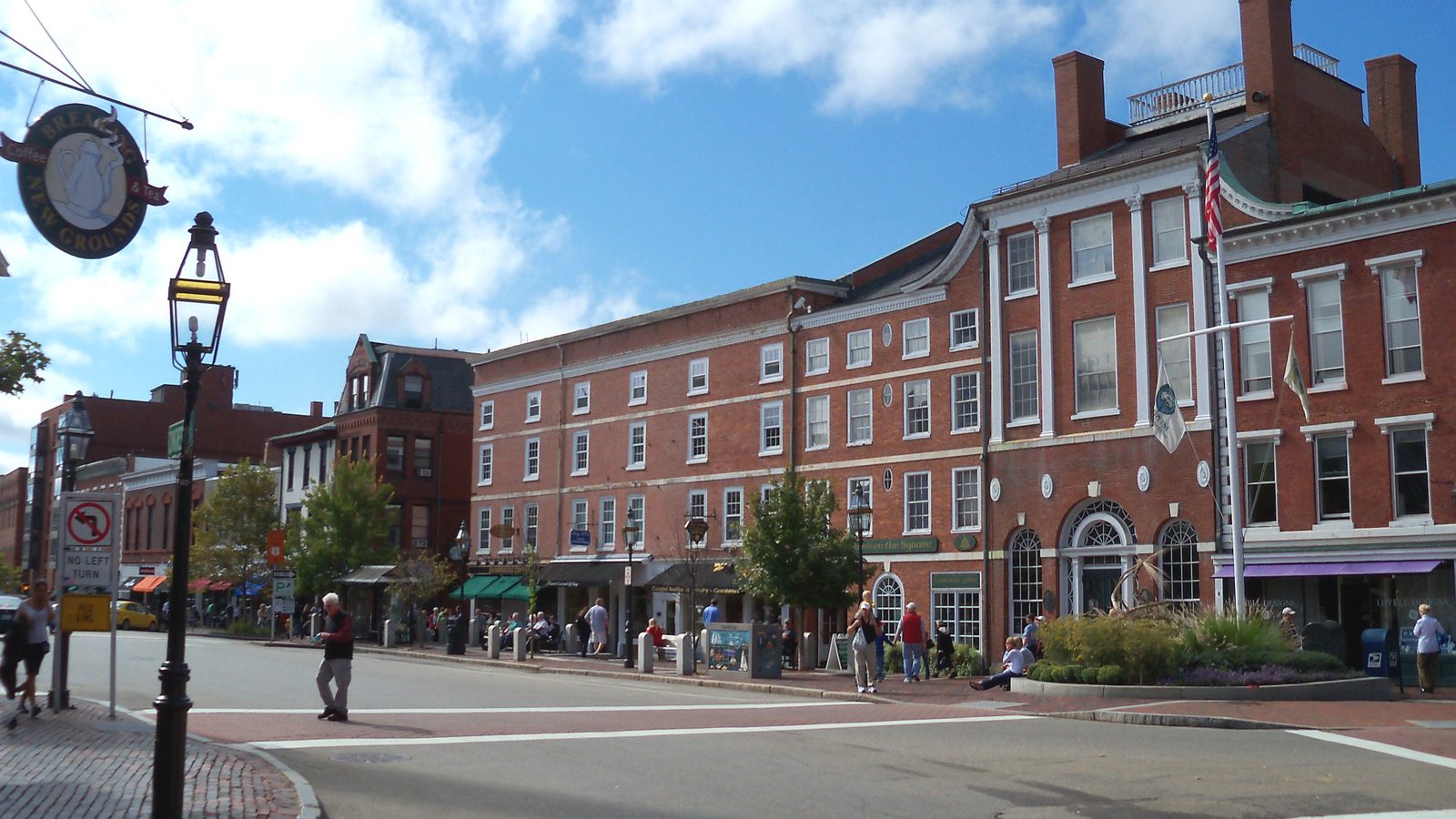
Somebody went and asked New Hampshire.
What New Hampshire was actually asked, what it actually said, who paid for the poll, and how that stacks against the independence movements that won their vote.
Twenty-nine percent. Fifty-two among Republicans.
SurveyUSA put a battery of independence questions to 625 New Hampshire adults over eight days in June 2022. These are New Hampshire questions, asked of New Hampshire people.
"I would prefer New Hampshire to govern itself as an independent country." All adults
The same question, among New Hampshire Republicans
"Would you support or oppose the idea of New Hampshire holding a vote to find out whether voters want New Hampshire to peacefully separate from the US?"
Roughly a third of a million adults, already there, before anyone campaigned.
Set against the Census count of 1,170,277 New Hampshire adults, 29% is about 339,000 people and 42% is about 492,000. The poll carries a credibility interval of 4.5 points, so treat those as a third of a million and close to half a million rather than exact counts.
The rest of the poll is just as useful. Sixty-three percent of Granite Staters said they trust their state government more than the federal government. Sixty-five percent said politicians in Washington violate their rights more than they protect them. Sixty-four percent said laws made in Washington are incompatible with New Hampshire's culture of freedom.
SurveyUSA Market Research Study #26405. Fielded 21 to 28 June 2022, released 5 July 2022. 625 New Hampshire adults, weighted to Census targets for gender, age, race, education and home ownership. Credibility interval 4.5 points. SurveyUSA report / full crosstabs.
Who paid for it.
The poll was commissioned by the Foundation for New Hampshire Independence, which is a separate organization from NHEXIT Now. SurveyUSA prints the sponsor on the face of the report, we are printing it here, and anyone checking would have found it in thirty seconds anyway.
What sponsorship does not do is write the answers. SurveyUSA is an independent firm with a long public record and it publishes the full crosstabs, the question wording, the field dates and the weighting for anyone to pull apart. The link above goes to SurveyUSA's own report.
Every question, every crosstab and every field date is published.
What SurveyUSA measured is a floor. It asked New Hampshire cold, before any campaign, any advertising, or any public argument had been made for independence at all. Forty-two percent is where this starts.
Ahead of the movements that won.
A poll is one thing and a referendum is another. So set New Hampshire beside the two independence votes everyone remembers, measured at the point those campaigns won the right to hold them.
SurveyUSA, June 2022. About 492,000 adults, with no campaign yet run.
Averaged year by year from 2013 to 2016, Leave never crossed 42%. It won anyway, on turnout the pollsters never reached.
Support sat around a third when Britain granted the vote. Scotland outran its polling on the day.
New Hampshire stands level with one of the movements that won the right to a vote and ahead of the other, and it got there before anyone campaigned. Independence referendums also pull people who do not otherwise vote: Scotland's drew 84.6% of its electorate, 3,623,344 votes from 4,283,938 registered, and the people the pollsters never reach have a habit of showing up. Forty-two percent going in is a strong opening hand.
Why the question matters more than the answer.
NHEXIT put six questions on the University of New Hampshire Survey Center's Granite State Poll in April 2025. The same 1,455 people were asked about the same subject three different ways, on the same afternoon.
"Would you support or oppose New Hampshire peacefully seceding from the United States and governing itself as a separate country?"
"Would you support or oppose the idea of New Hampshire holding a vote to find out whether voters want New Hampshire to peacefully declare independence from the United States?"
"If New Hampshire were not already part of the United States, would you want New Hampshire to join?"
Nobody changed their mind between those questions. The sentence changed.
Twenty-two points of spread, inside a single poll, on a single afternoon. Three things move it, and each one is visible in the numbers above.
The noun. Asked about seceding, 12 percent were in favor. Asked about declaring independence through a vote, 21 percent were. Nearly double, from one word and the picture it puts in somebody's head.
The way out. Every one of those questions let a respondent step aside, and between eleven and thirteen percent took it, answering neutral or unsure. A ballot has no neutral box. It asks for yes or no and counts what it gets.
The direction. Turned around, asking whether New Hampshire would join the United States if it were not already a member, 34 percent said it would not. Nearly three times the number who would vote to secede, from the same room, about the same arrangement. What separates those two answers is not a judgment about the union. It is the pull of a thing that already exists.
None of which makes 12 percent wrong. It makes it a floor: the number the most abstract version of the question returns, asked of people who were offered a way not to answer, about a process nobody described to them. A referendum is the opposite on all three counts. It names independence, it is peaceful and lawful by construction, and it forces a choice. A poll answers the pollster. A ballot answers the state.
University of New Hampshire Survey Center, Granite State Poll, April 2025. 1,455 respondents, fielded 17 to 21 April 2025, margin of sampling error 2.6 points. Commissioned by NHEXIT. The report's summary page prints 2.1 and its methodology page gives 2.6. The 2.6 is the margin; the 2.1 is the design effect, and 2.6 is what 1,455 respondents yield. Read the full report.
A poll is not a vote.
Everything on this page is a measurement of opinion at a moment, taken from a sample, carrying an error bar. It is the best evidence available about what Granite Staters think, and it is not the thing that settles anything.
The only number that ever settles this comes out of a ballot box. No technicality, either: a referendum is the one instrument that produces an answer nobody can wave away, including us if it goes the other way.
We are asking for the measurement that binds.
Somebody will cite polling as a reason not to hold the vote. If the numbers say what they think they say, a referendum would settle this in their favor for a generation. In 2022 the objection that actually got filed in New Hampshire was not about the numbers at all. It was a request to keep fourteen candidates off the ballot for having asked.
Sources
- SurveyUSA Market Research Study #26405, New Hampshire, fielded 21 to 28 June 2022, 625 adults. Full crosstabs (PDF). Commissioned by the Foundation for New Hampshire Independence.
- University of New Hampshire Survey Center, Granite State Poll, April 2025, 1,455 respondents. Full report (PDF). Commissioned by NHEXIT.
- US Census Bureau, Population Estimates Program, Vintage 2025. New Hampshire adult population 1,170,277 as of 1 July 2025.
- Scottish referendum turnout, 18 September 2014: Electoral Management Board for Scotland. 3,623,344 votes cast from 4,283,938 eligible, 84.6%.
- Scottish Social Attitudes Survey; UK pre-referendum polling averages, 2013 to 2016.
- A second estimate, by a different route: USexit, New Hampshire puts support at roughly 45% by adjusting a 2024 YouGov poll for ballot framing. USexit is a Texas Nationalist Movement project, so read it as another campaign's working, not as an outside audit.